About Course
COURSE OVERVIEW
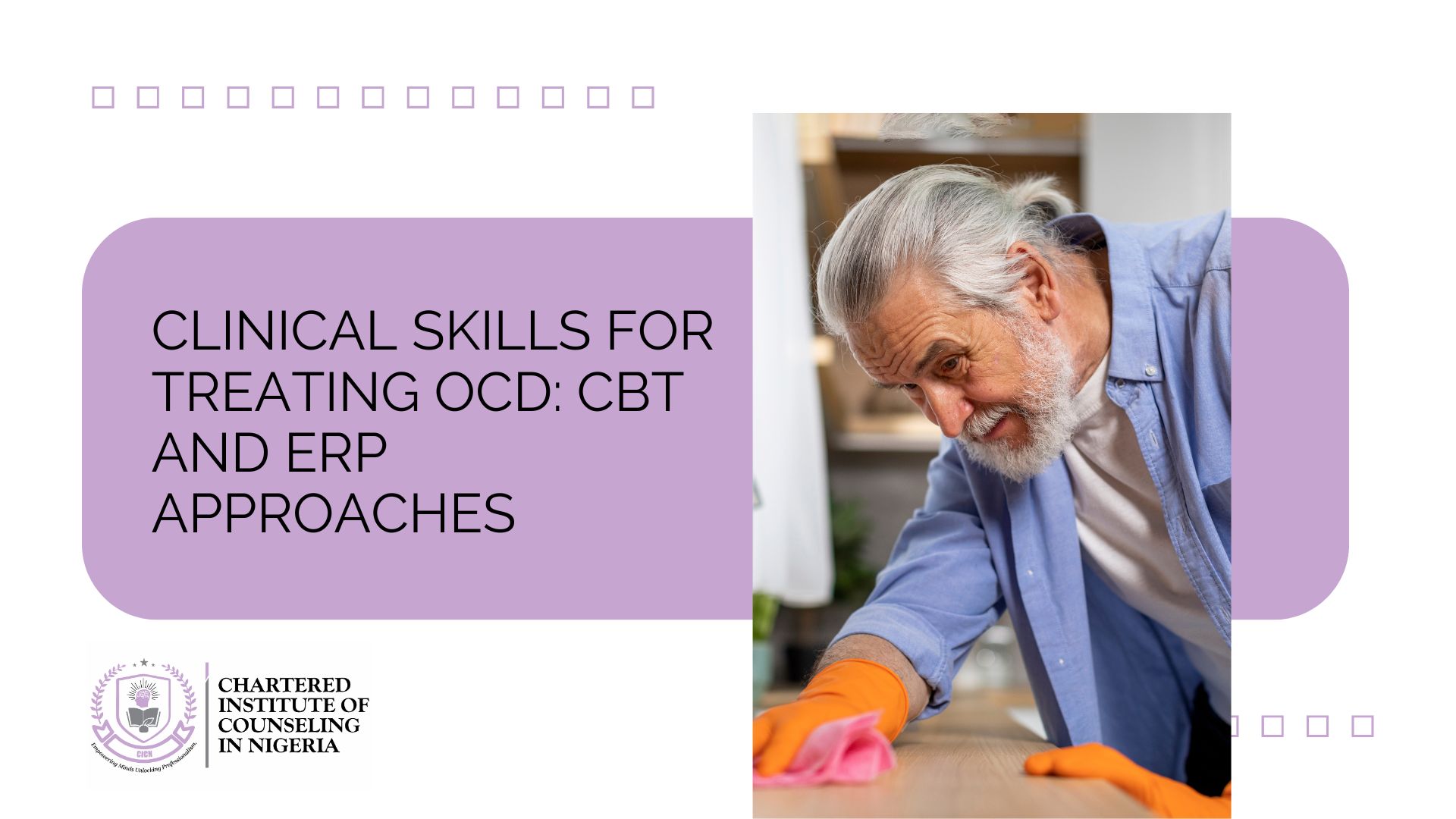
This course provides a practical and evidence-based understanding of how Cognitive Behavioral Therapy (CBT) and Exposure–Response Prevention (ERP) are used to assess, conceptualize, and treat clients with Obsessive–Compulsive Disorder (OCD). Participants will gain both theoretical insight and applied counseling techniques for managing intrusive thoughts, compulsions, and avoidance behaviors.
LEARNING OBJECTIVES
By the end of this course, participants will be able to:
- Explain the psychological and neurobiological foundations of OCD.
- Differentiate between obsessions and compulsions in assessment and case formulation.
- Describe the principles and structure of CBT for OCD.
- Apply Exposure–Response Prevention (ERP) techniques ethically and effectively.
- Recognize common therapist challenges and how to manage client resistance or distress.
- Adapt CBT/ERP approaches to cultural and ethical contexts, including low-resource settings.
- Evaluate treatment progress using validated scales and monitoring tools.
Course Content
COUNSELING APPROACHES FOR OCD: CBT AND EXPOSURE–RESPONSE PREVENTION (ERP)
-
Lecture 1: Understanding OCD Definition and Clinical Features of OCD (DSM-5 & ICD-11 Overview)
-
Lecture 2: Foundations of CBT for OCD
-
Lesson 3: Introduction to Exposure–Response Prevention (ERP)
-
Lecture 4: Integrating CBT and ERP in Counseling Practice
-
Lecture 5: Ethical and Cultural Considerations
-
Lecture 6: Assessment, Monitoring & Evaluation
Student Ratings & Reviews

No Review Yet