About Course
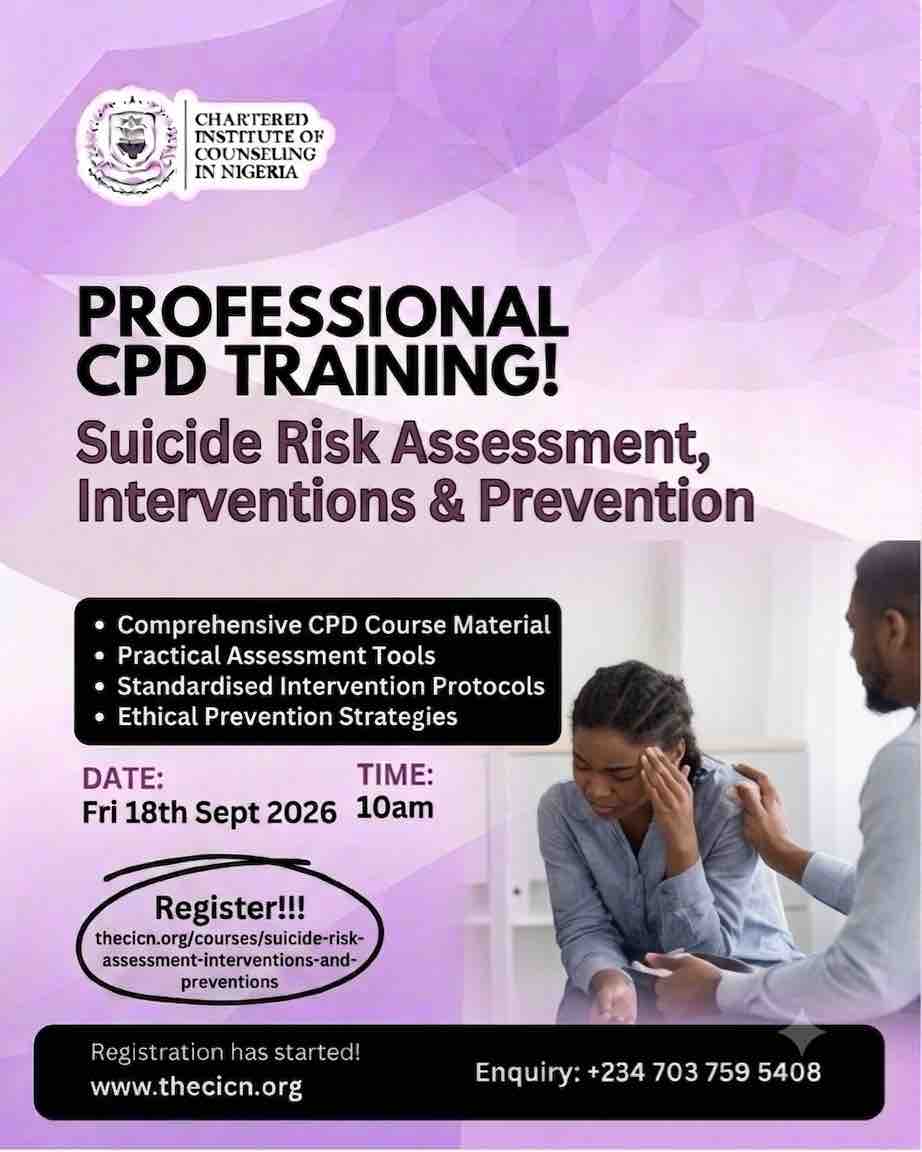
Suicide risk is one of the most serious and sensitive issues counsellors and helping professionals may encounter in practice. Recognising suicidal distress early, assessing the level of risk appropriately, and responding with competence can be critical to protecting life and connecting individuals with the support they need. However, working with suicidal ideation, suicidal behaviour, and self-harm requires careful clinical judgment, ethical decision-making, clear professional boundaries, and an understanding of when urgent intervention or specialist referral is necessary.
This CPD training equips participants with practical knowledge and skills to recognise suicide risk factors, warning signs, and protective factors; explore suicidal ideation and self-harm appropriately; conduct suicide risk assessments within their professional scope; and communicate effectively with individuals experiencing suicidal distress.
Participants will also learn how to develop collaborative safety plans, respond to escalating risk, recognise situations requiring urgent specialist or emergency referral, and apply appropriate safeguarding, documentation, follow-up, and multidisciplinary procedures.
The course emphasises evidence-informed practice, person-centred care, cultural sensitivity, ethical decision-making, and collaborative suicide prevention, enabling counsellors and helping professionals to respond to suicide risk safely, compassionately, and within appropriate professional and ethical boundaries.
CPD Value
- 2–3 CPD Units
- Recognised for Continuing Professional Development (CPD) and professional learning.
Course Fees
Registration Fee
$25
Full Course Package
$90
Student Ratings & Reviews

No Review Yet