In many Nigerian homes, mental health is hardly ever talked about, especially
when it involves anxiety, which is often misinterpreted as laziness, weakness, or
even disobedience rather than being seen as a valid emotional experience. The
shame surrounding mental illness, along with deeply ingrained cultural values of
resilience, creates an environment where individuals struggling with anxiety
suffer in silence.
But anxiety is real. It is not a choice made by individuals. It is not a ‘bad
character’
. According to the World Health Organization (2022), over 300 million
people globally live with anxiety disorders, making it one of the most prevalent
mental health conditions in the world. A community study in a semi-urban
Nigerian town found a 12-month prevalence of anxiety disorders to be around
15%, with higher rates among females (≈19.6%) than males (≈11.4%) (Gureje et
al., 2006).
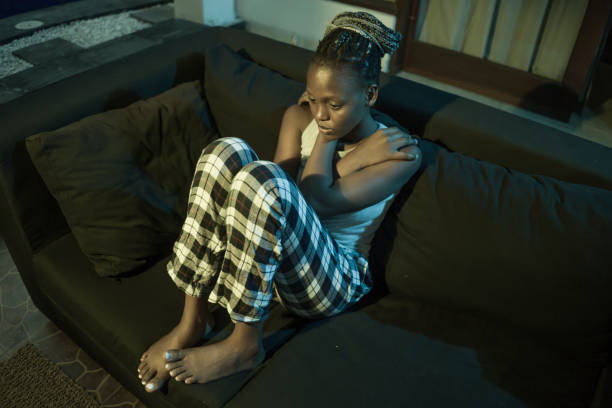
In Nigerian homes, the symptoms of anxiety may present in indirect ways such
as withdrawal from house chores, constant tiredness, restlessness, irritability, or
frequent stomach pains. These signs are often dismissed as signs of being
irresponsible or being lazy especially when it involves children and young adults.
But they are cries for help.
In Nigerian culture, there are expectations of resilience which makes it more
difficult to ask for support. Children are expected to “snap out of it,
” while adults
are told to “pray harder” or “grow up” when faced with difficulties. Unfortunately,
responses like these deepen the shame and delay access to mental health care.
It is time we learn to listen differently. When a child or adult in our home seems
“lazy” or constantly tired, we must pause and consider: could this be anxiety?
These are some practical ways to support a family or loved one with anxiety:
– Ask open-ended questions like “How are you feeling lately?”
– Create a safe space for emotional expression.
– Encourage, instead of criticising.
– Consider seeking the help of a professional counsellor.Talking about anxiety will not make it worse but ignoring it will. The earlier we
understand that anxiety can appear in form of silence, irritability, or avoidance,
the earlier we can help those we love heal.
Final Thought: If someone had a fever, would they be asked to “snap out of it”?
Anxiety and other mental health issues deserve just as much understanding. Let
us replace judgement with compassion, both at home and in our society.
References
World Health Organization. (2022).
*World mental health report: Transforming
mental health for all*
. https://www.who.int/publications/i/item/9789240049338
Gureje, O., Lasebikan, V. O., Kola, L., & Makanjuola, V. A. (2006). Lifetime and
12-month prevalence of mental disorders in the Nigerian Survey of Mental Health
and Well-Being.
*The British Journal of Psychiatry, 188*(5), 465–471.
https://doi.org/10.1192/bjp.188.5.465