Introduction
A male client in his early forties presented with persistent and unfounded suspicions of infidelity toward his spouse. His symptoms included delusional jealousy, emotional volatility and behavioral surveillance. Prior to therapy, he had undergone multiple spiritual interventions, including deliverance sessions, however, his presentation aligned with Othello Syndrome, a psychiatric condition requiring structured psychological and sometimes psychiatric treatment. The misinterpretation of his symptoms as purely spiritual delayed appropriate care and contributed to relational deterioration, this highlights the clinical risk of addressing psychological disorders exclusively through spiritual frameworks, a situation that can no longer be allowed to linger in Africa.
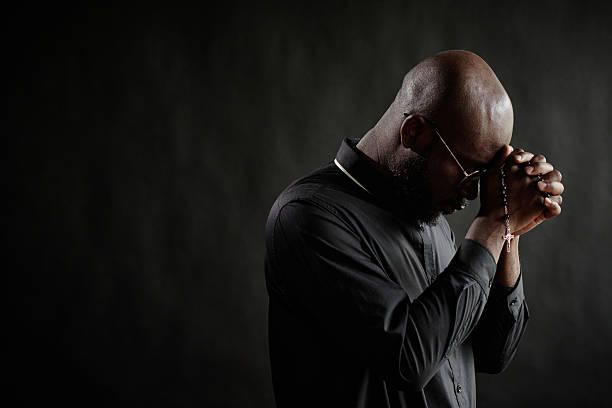
There is a version of God that many Africans have come to know intimately, a God we call upon for everything. We pray for electricity to stay, for water to run, for safety on roads that should already be safe. In fact, we pray before turning on our cars, hoping faith will compensate for faulty batteries and neglected systems. Prayer is not occasional, it is constant, instinctive and woven into the rhythm of daily life. But somewhere along the line, something shifted, prayer stopped being a source of strength and quietly became a substitute for responsibility. This is not merely a spiritual pattern, it is a psychological one.
Not An Attack on Religion
Let us begin with clarity, this article as some will automatically assume, is not an attack on God or on faith neither is it an attempt to diminish the role of spirituality in African life. As a matter of fact, faith has sustained individuals and communities through loss, instability, and systemic failure. It has offered meaning, hope, and emotional regulation in contexts where institutional support is limited. However, when any system, spiritual or otherwise, is overextended beyond its function, it begins to fail the very people it was meant to support.
This article is therefore more about the current situation across Africa, where religion replaces psychological understanding, Prayer replaces personal and relational responsibility and spiritual explanations override clinical realities.
The Psychological Consequences of Faith as a Mean of Survival
Across many African contexts, inconsistent systems have shaped human behavior: weak infrastructure, economic instability, limited access to healthcare and mental health services, etc. In such environments, individuals naturally seek stability. For many, God becomes the most reliable constant, and prayer becomes the most accessible coping mechanism. From a psychological standpoint, this is adaptive. However, when reliance on prayer becomes exclusive, it may contribute to patterns such as Learned Helplessness, a condition in which individuals, after repeated exposure to uncontrollable situations, begin to believe they have no agency, even when solutions are available.
This can manifest in statements such as: “Only God can fix this.” “There is nothing I can do.” While spiritually meaningful, such beliefs may also reflect diminished psychological agency.
Religion Without Psychology – A Clinical Concern
In a society where even the spiritual leaders practically use psychology to explain spiritual concepts, ignoring the importance of psychology becomes hypocritical because religion provides meaning while psychology provides mechanisms, religion addresses purpose and belief and psychology addresses behavior, cognition, and emotional processes. When psychological insight is absent, complex human experiences are often misinterpreted. Trauma may be labeled as spiritual attack, anxiety as lack of faith, depression as spiritual weakness and relational dysfunction as moral failure. This mislabeling delays appropriate intervention and may prolong distress.
The Deeply Personal Impact on Marriage
Marriage in many African contexts is highly spiritualized but often insufficiently prepared for at a psychological and relational level. Individuals invest in ceremonial readiness and spiritual preparation,but often lack emotional intelligence, communication skills, sexual education and psychological awareness. This gap becomes most visible in the area of intimacy.
A woman in her late thirties presented to therapy in my office after over a decade of marriage. She had never experienced sexual satisfaction and her coping strategy had been spiritual: Attending prayer programs, fasting and seeking pastoral counsel where she had been constantly advised to “submit more” and “pray for change.” However, she had never received sexual education, language for expressing desire, or permission to explore her own needs. Her experience reflects a broader issue: the absence of sexual literacy within spiritually guided marital frameworks.
Research consistently highlights that sexual communication and knowledge are key predictors of marital satisfaction (Byers, 2011; Mark & Lasslo, 2018). Without these, prayer alone cannot resolve intimacy deficits.
The Sexual Dimension: A Silent but Pervasive Crisis
One of the most under-discussed consequences of this imbalance is sexual dissatisfaction within marriages. Cultural and religious conditioning often promote silence around sexual needs, shame associated with desire and gendered expectations of endurance. The result is a pattern where women may experience chronic dissatisfaction but remain silent, men may experience performance anxiety or confusion without support and couples disengage emotionally and physically.
Empirical studies indicate that sexual satisfaction is strongly linked to overall relationship quality and psychological wellbeing (Sánchez-Fuentes et al., 2014). Yet, in many cases, sexual challenges are not addressed clinically, but spiritualized.
Religious leaders play a critical role in providing spiritual guidance. However, challenges arise when guidance extends into areas requiring specialized training, such as sexual functioning, mental health disorders and trauma processing Without grounding in Psychology or Sex Therapy, well-intentioned advice may lack the clinical precision required for effective intervention. This is not a critique of intention, but a call for interdisciplinary collaboration.
Why Therapy Remains Underutilized
Despite its importance, therapy is often underutilized due to social stigma, misconceptions about mental health, limited access to trained professionals and the belief that spiritual solutions should suffice. However, research in mental health integration suggests that combining spiritual resources with psychological intervention produces more effective outcomes than relying on either alone (Koenig, 2012).
The goal is not to replace religion with psychology, but more about achieving integration. An integrated model recognizes that prayer can support emotional regulation, therapy can address cognitive and behavioral patterns and faith can coexist with clinical intervention. Such an approach aligns with holistic care models increasingly adopted in global mental health practice.
Conclusion
The question is not whether Africans pray too much, but whether prayer has been asked to do what it was never designed to do alone. God has given us cognitive capacity, emotional systems, scientific knowledge and professional expertise. To ignore these is not an expression of faith but a limitation of application. Until we begin to integrate spirituality with psychology, faith with responsibility, and prayer with informed action, we risk sustaining cycles of distress that are both preventable and treatable.
References
Byers, E. S. (2011). Beyond the birds and the bees and was it good for you? Thirty years of research on sexual communication. Canadian Psychology, 52(1), 20–28.
Koenig, H. G. (2012). Religion, spirituality, and health: The research and clinical implications. ISRN Psychiatry.
Mark, K. P., & Lasslo, J. A. (2018). Maintaining sexual desire in long-term relationships: A systematic review. Journal of Sex Research, 55(4–5), 563–581.
Sánchez-Fuentes, M. M., Santos-Iglesias, P., & Sierra, J. C. (2014). A systematic review of sexual satisfaction. International Journal of Clinical and Health Psychology, 14(1), 67–75.
American Psychiatric Association. (2013). Diagnostic and Statistical Manual of Mental Disorders (DSM-5).